- Dec 14, 2024
3 False Beliefs About Braking in Mountain Biking
- Roxy & Berni - MTB Coaches
- 0 comments
Braking Skills – sounds simple, right? But is it really that straightforward?
As full-time mountain bike coaches, we see it all the time: even experienced riders (or those who think they are!) unknowingly hold themselves back. Their ego convinces them that they don’t need to work on certain "basic" skills.
Yet, fact is: One of the most underestimated but crucial skills is braking. Effective, controlled braking is often dismissed as "too basic to bother with," but it can have a massive impact on your riding.
In this article, we’ll bust some common myths about braking and help you see if your ego might be tricking you too. Plus, we’ll show you how to improve your technique.
Why Do Braking Skills Matter?
Because only those who can brake really well can ride really fast - at least safely. And only those who master braking can handle steep, technical trails with control.
So basically, improving your braking will improve your riding on so many levels!
First off, you should use your index finger only - that's all you need to brake a modern mountain bike. Why so? Watch this:
And now, let's jump right into three persistent braking myths.
We (as full-time coaches) keep hearing all the time 😮💨
1️⃣ "Use the rear brake more than the front, or you’ll go over the handlebars!"
2️⃣ "Shift your weight back when braking."
3️⃣ "Never brake in corners!"
Let’s take a closer look at these beliefs to uncover the truth behind them.
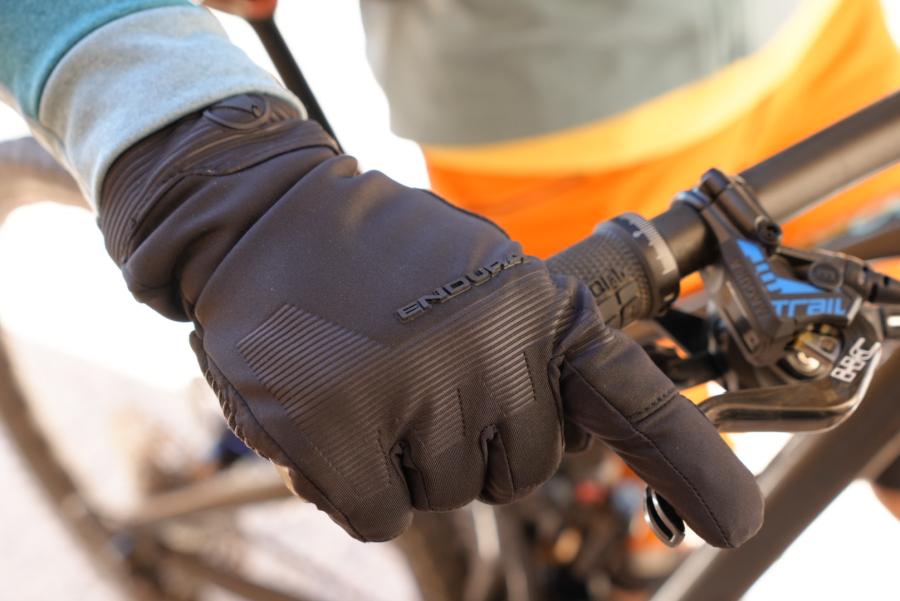
Belief #1: "Use the Rear Brake More Than the Front, or You’ll Go Over the Handlebars!"
This outdated advice holds a lot of riders back. To truly control your speed and tackle steep trails confidently, you need to use your front brake effectively and confidently.
Here’s why: your front brake provides way more stopping power than your rear brake. When you brake, your body weight (the “heavy mass”) shifts forward onto the front wheel, creating extra traction. This means the front wheel can handle more braking force without skidding.
But here’s the catch – you need to modulate your brakes. Smooth, controlled pressure helps you avoid locking up your tires, prevents skidding, and keeps you stable. Think of it as finding that sweet spot right before your tires lose grip.
📹 Check out this video about braking where we explain braking in more detail and share exercises you can integrate into your rides – yes, even if you’re an experienced rider!
If you want more (and methodically structured) step by step drills for braking and many more skills, then check out our practice catalogue for FUNdamental riding skills right here.
The truth is, many riders know they should use their front brake more but don’t actually do it. They either grab it too hard, too hesitantly, or not at all, wasting braking distance and limiting their ability to ride faster or steeper.
Even if you’ve been riding for years, practicing braking drills can be a game-changer. Mist riders underestimate the power of going back to the basics! Which is why we keep promoting the mantra REGRESS TO PROGRESS.
Belief #2: "Shift Your Weight Back When Braking."
This one’s tricky because it seems logical. When you brake, your bike slows down, but your body actually still keeps moving forward. It’s that feeling of being thrown over the bars that leads many riders to believe they should shift their weight back.
But here's what MUCH more effective than "shifting your weight back"...
To brake effectively, you should:
1️⃣ Use both brakes at the same time, with smooth, controlled pressure to avoid locking up.
2️⃣ Bend your arms and legs to lower your center of gravity.
3️⃣ Engage your core and actively drop your heels. This helps you absorb the forward momentum with your legs rather than relying on your arms to hold you back.
If you’re braking hard or stopping from high speed, your hips will naturally shift back as you press into the pedals and drop your heels. This movement happens intuitively if you’re in the right position. Which is why BODY POSITIONING is such a key skill, which is actually even more underrated than braking. Work with us personally (on your doorstep) to find out whether your body positioning is helping you ride safer or currently stopping you from progressing!
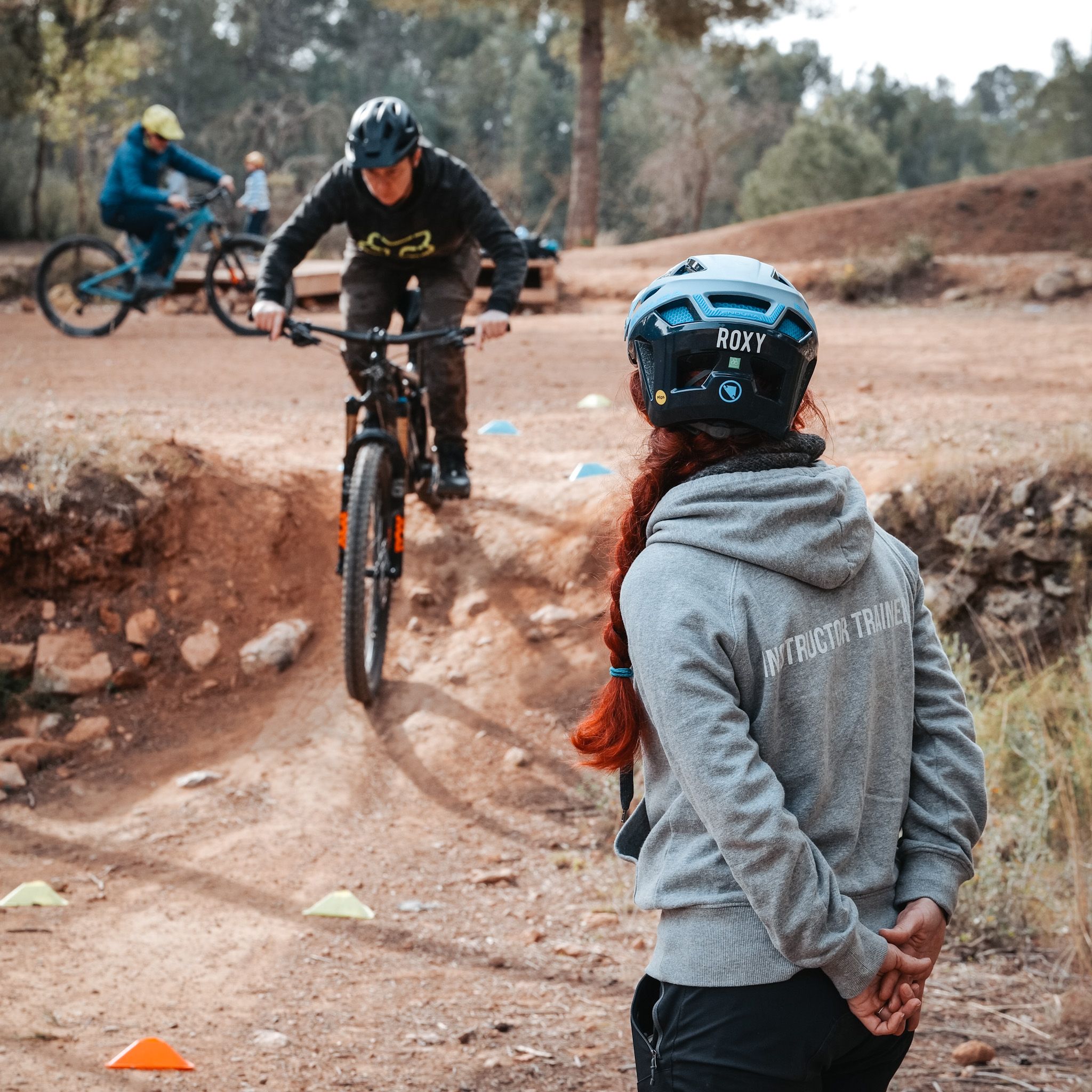
Belief #3: "Never Brake in Corners!"
This is mostly true – but there’s some nuance to it.
Braking in corners has some clear disadvantages, because tires CAN'T multitask:
It reduces traction, making your tires less likely to hold their line.
In very tight turns a braked front wheel can “fold”, causing you to lose balance and crash.
Braking stiffens your suspension, which makes a rough turn rougher.
Braking uprights your bike, making it harder to maintain the lean angle needed for turns at higher speeds.
So what should you do if you’re not confident enough to release the brakes entirely, or if the terrain is steep and you risk accelerating too much?

Here’s a braking strategy for corners:
1️⃣ Brake hard before the corner to enter at a controlled speed.
2️⃣ If necessary, lightly feather the rear brake in the corner – but avoid locking up the wheel.
3️⃣ On steep or loose terrain, where rear braking alone isn’t enough, carefully modulate the front brake, too. In tight switchbacks, you likely won’t need much lean, so front braking becomes safer and more effective - but again, modulate the brakes, don't grab them!
Want better control at slow speeds or in technical corners? Mastering the trackstand is an invaluable skill that will elevate your riding. Start with our trackstand course for free right here.
What Braking (and Limiting Beliefs About Braking) Can Teach Us About Life
Braking isn’t just a riding skill – it can be a life lesson. Just like false beliefs about braking can hold you back on the trail, unconscious “truths” can limit your potential in other areas of life too.
For example:
If you believe, “I don’t need to revisit the basics – I already know them,” you might miss opportunities to learn or improve.
On the flip side, challenging your beliefs can open doors to new possibilities and growth – both on and off the bike.
What are Limiting Beliefs?
Limiting Beliefs are ideas held with absolute conviction, almost like religious doctrines – for example, “You can’t teach an old dog new tricks.” In short, they are expressions of what we think about ourselves, “reality,” or the world.
They shape our expectations, define what we accept as truth, and either limit or expand what we can achieve. You could also think of them as internal convictions or personal truths - They direct the focus of our attention and determine which information we notice, how we interpret it, and even how we behave!
This happens because our brain is wired to find patterns in everything – that’s its job. But here’s the truth (and this sentence might take a few reads to sink in):
NOTHING in life has meaning except the meaning we assign to it.
Our brain constantly strives to create a coherent model of the world. What doesn’t fit, it adjusts to make it fit. To do this, it not only fills in gaps but also predicts what’s likely to happen in the future – and it filters out anything that doesn’t align with its existing beliefs to reinforce those patterns.
For example: If you hold the belief, “If someone doesn’t like me, it must be my fault,” then you’re likely to doubt yourself deeply when faced with criticism or rejection. On the other hand, if your belief is, “What others say about me reveals more about them than about me,” then you’re more likely to see criticism as an opportunity to understand the other person, rather than immediately doubting yourself.
Does that make sense? Let us know in the comment section below!
Now, back to braking on a mountain bike!
If you believe, “I already know this, so I don’t need to bother with the basics anymore,” you might find that you sometimes think the same way in daily life. And this could lead you to miss out on many NEW, wonderful experiences because you’ve lost a bit of the openness and curiosity we’re all born with.
Conclusion
There’s no absolute truth, yet we often label things as right or wrong, good or bad. And by doing so, we limit ourselves before we even start.
Don’t let your ego and your limiting beliefs hold you back!
We challenge you to question your beliefs – on the bike and in life – and see what new trails you can discover. Both on the bike and in your brain.
Work with us to find out what works for YOU!
