- Jan 1, 2025
Learning How to Drop as an Adult - About Confidence, Bravery and a Common Myth!
- Roxy
- 0 comments
Learning a sport as an adult can be incredibly frustrating. You watch younger riders and see how easy it could be. Yes, could be – if only you dared to try!
“My fear is holding me back!” – This is something many adult riders who want to learn drops or jumps say. We watch others do it with ease and think, “I just need to be braver!”
But is it really that simple? Is bravery the solution?
Let me share a bit about my own experience, because you might learn from my mistakes – I was kind enough to make them for you already. 😁
When I started mountain biking, I was 22. I was already an adult – still young, but definitely an adult. I joined a mountain bike club to learn how to “ride properly.”
I took a skills clinic to learn mountain biking technique.
The coaches were a mix of younger and older riders, but they all had one thing in common: they had learned the sport as teenagers or even as kids. They showed us “basics”, like wheel lifts and hops, they seemed like magic to me - but I wasn’t able to perform them at ALL. (BTW - now, 15 years later, I know these are not "basics" - but more about that later).
So, because I was so bad at these skills I told myself I was “too dumb” or “too scared.”
But I still wanted to ride with the group, so I joined their rides, stopped practicing skills (because I thought I was too dumb) and with time, simply by riding, I slowly became braver. I started tackling more challenging trails and then also started to ride clipped in (i.e. I started to ride SPD pedals).
With this newfound confidence, and the safety of being clipped in, I began taking small jumps, trying drops, and tackling more technical terrain. I thought, “Now that I’m clipped in, I’m a ‘real’ mountain biker.”
This was me back then, about 17 years ago:
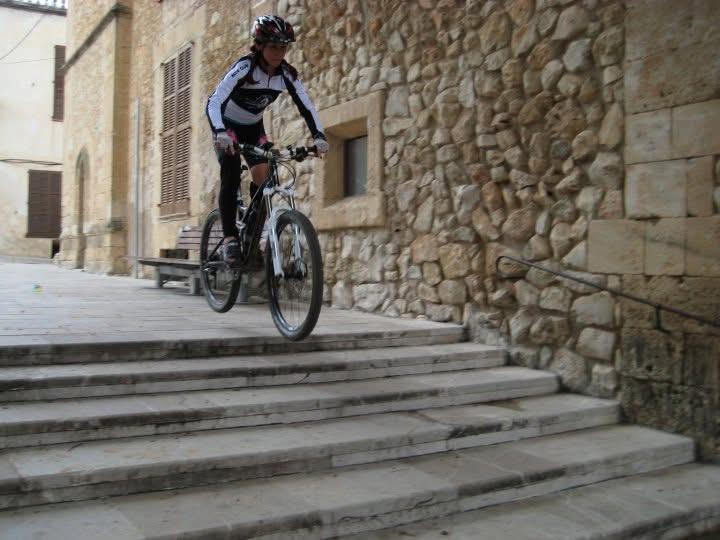
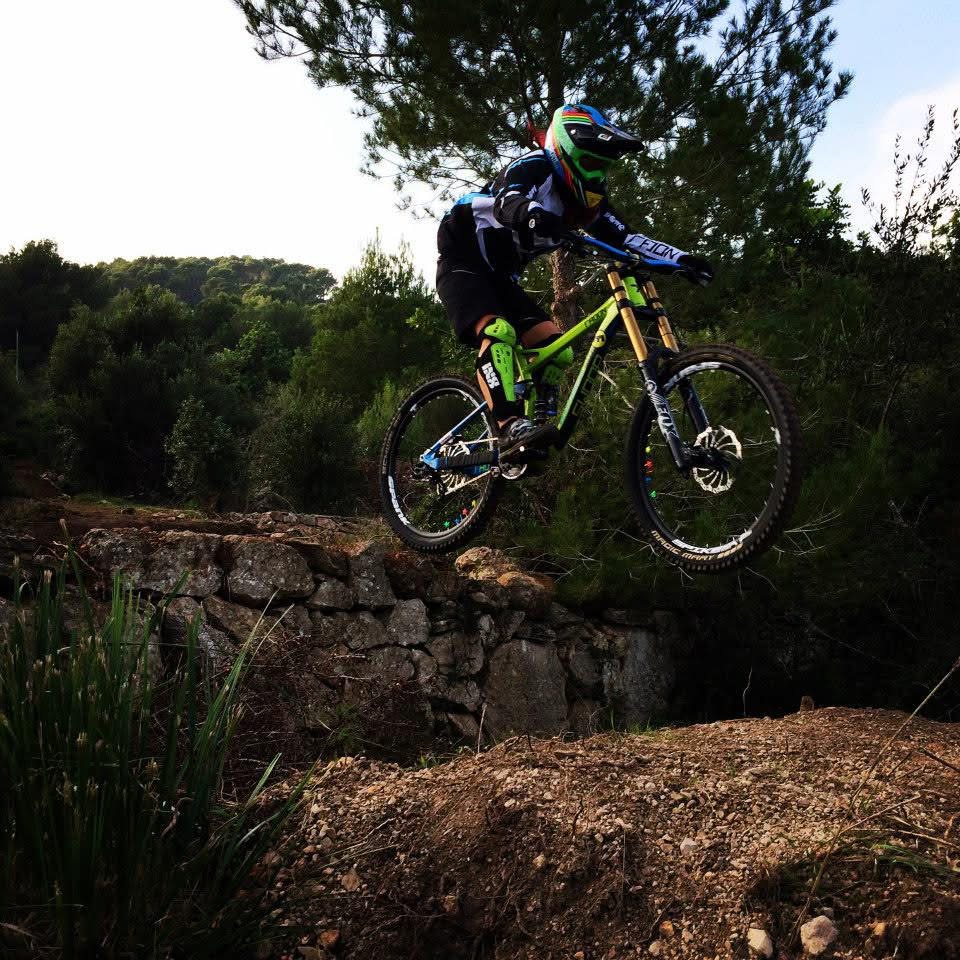
I was extremely proud of my progress, started catching air, hitting drops, riding faster...!
But then...
I started crashing. A lot.
And the crashes weren’t just minor – some were bad enough to get me severely injured and they made me fearful - AGAIN.
Eventually, I became so scared that I avoided slippery, technical or steep trails altogether. I walked my bike down sections I had ridden before and didn’t even consider attempting drops anymore.
That’s when I started diving into the topics of fear and riding technique I found the true cause for my fear and also my crashes.
Now, 15 years later, I understand something VERY important: My problem was NOT a lack of bravery.
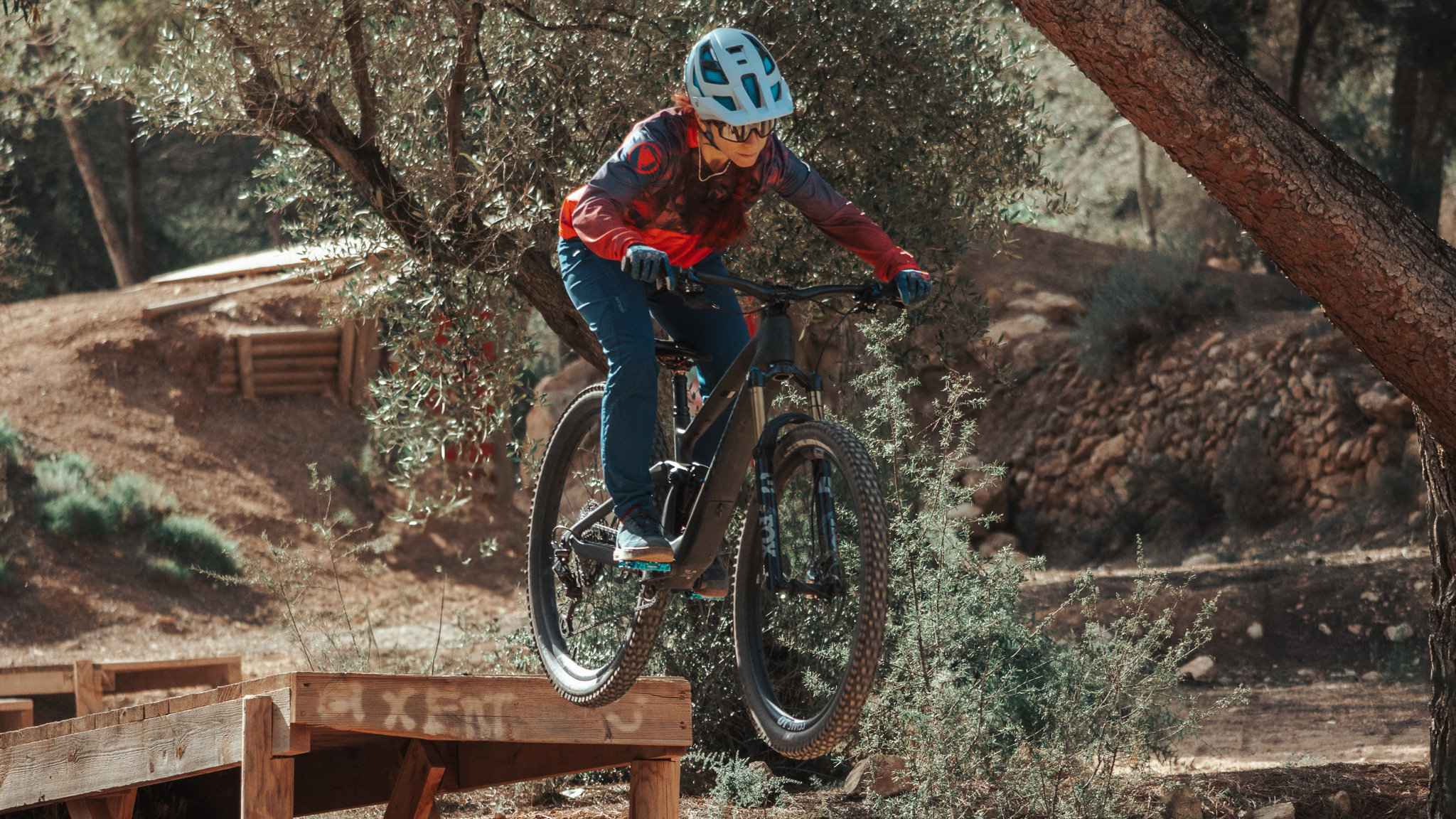
This is me today:
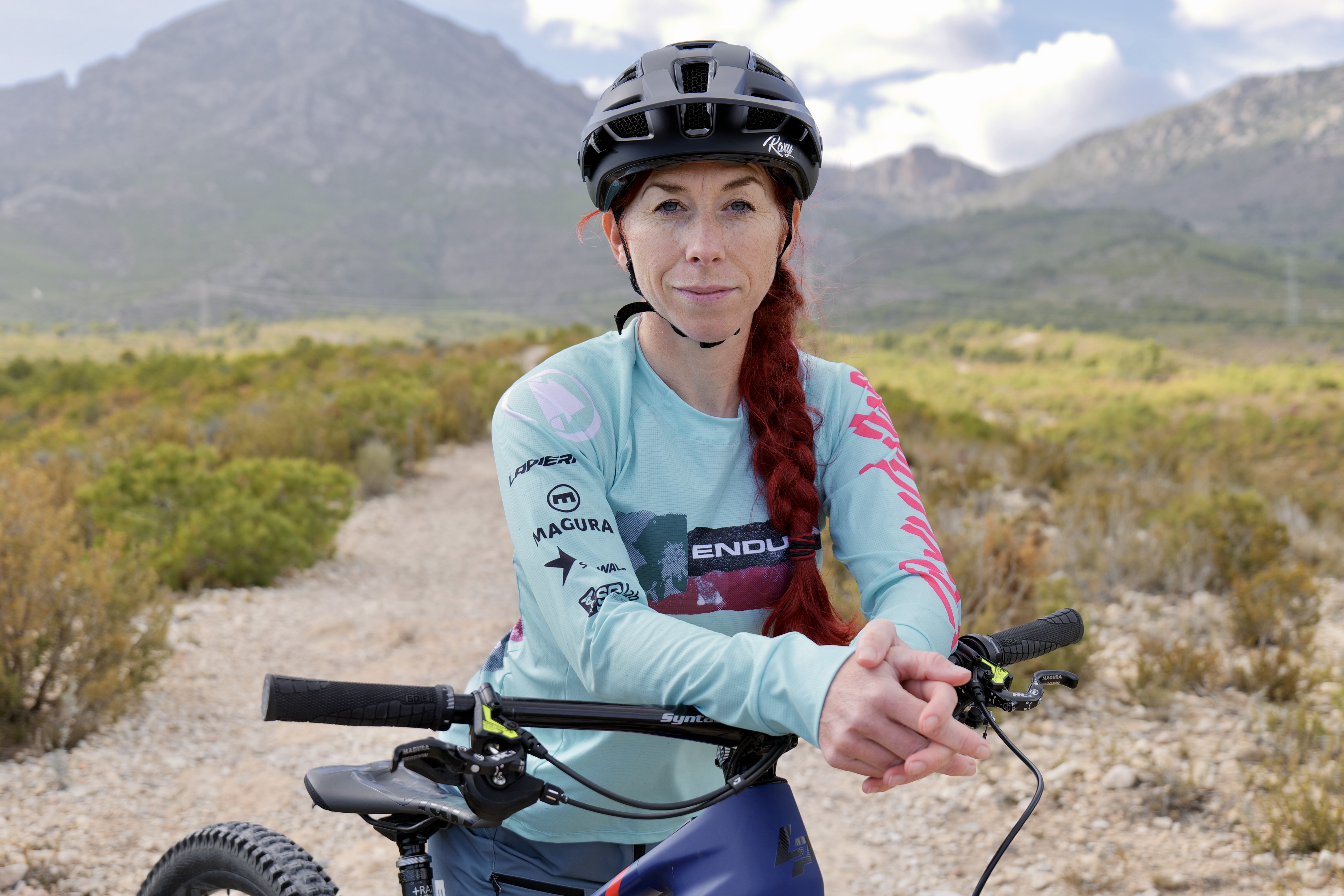
If you know who I am, you might know I’m now a professional skills coach (yes, I teach skills full time now), and I'm also a certified mental trainer, and international instructor trainer (certifying other coaches) - and been so for years now. So, I’d like to think I’ve learned a thing or two about this subject. 😁
By now, I can confidently say:
My problem wasn’t bravery. It was a lack of technique.
And by “technique,” I don’t mean vague advice like, “Just stay off the brakes,” “Stay loose,” or “Follow my line.”
I mean solid skills formed by structured skills training: that's step-by-step guidance, focused practice, and most importantly, time to internalize what I’d learned - before applying random movement patterns to the trail and expecting them to work.
Frankly, that's what I was doing - and THAT was the cause for my crashes and my fear. 🙄
The thing is, to form solid skills, adults need to:
Understand the movement goal.
Visualize it in our minds.
Practice incrementally in a safe, controlled environment.
Repeat.
Refine by seeking feedback.
Allow for rest and consolidation - through more repetition.
Gradually increase variation and difficulty - aka take it to the trails.
Being able to perform a skill doesn’t mean you can do it sometimes. True mastery means you can execute it cleanly and consistently – even under changing conditions or distractions.
And that’s what matters for drops - because only small errors can have massive consequences.
Why is this process different for adults?
For kids and teenagers – up until around age 20 – most learning happens visually and through trial and error. They watch, try, fail, adjust, and eventually succeed, even without correction. Adults, however, rarely learn this way.
After age 20 (or even as early as 12 for those who weren’t very sporty as kids), we lose this ability of watching, trying and auto-correcting our skills. Adults need to understand movements, take longer to internalize them, and often don’t even realize when a movement is incorrect. That’s why external feedback is so crucial for adult learners.
So, what does all this have to do with drops?
Learning to drop isn’t rocket science – it’s certainly easier than learning to jump – but for adults, it still involves the above mentioned seven steps.
It’s not enough to simply “follow my pace, and I’ll tow you over the drop.”
Otherwise, your brain will scream, “BUT WHAT THE HECK AM I SUPPOSED TO DO AT THE TAKE-OFF??” (That’s what my brain did, at least.)
So, what are you supposed to do on drops?
In simple terms, you need to:
Keep the front wheel in the air until the rear wheel rolls off the edge.
Adjust the bike’s angle to match the landing slope.
That’s it!
Sounds easy? “Technically,” yes. But in reality, not so much.
Every drop is different. Every landing is different. Sometimes there’s a gap between takeoff and landing, and often the landing is short, requiring precision.
Learning to drop requires mastering a range of techniques and being able to instinctively choose the right one for each drop. (And NO - wheel lifts and drops are not "basics", if you want to find out more about my skills pyramid, then watch this video on YouTube).
⚠️ Tip: Beware of Quick Fixes + False Marketing
Anyone who insists, "This is the ONLY correct way to drop, and there’s no other way!" or promises you’ll master drops in a single day either lacks a proper understanding of how the human brain learns or is simply engaging in false marketing.
Want to hear “just push the bike forward, easy as that”! I’m sorry. That’s not what I do here. Because your safety matters to me.
A good coach will be honest with you and won’t sell you quick fixes – because those can put you in danger.
A good coach knows: Slow progress is faster than fake progress.
And I can promise you this: We’ve already taught hundreds of riders how to drop. Not in a day, but safely and consistently. But not through an article or a YouTube Video. With structured, professional practice drills and personal coaching.
If you want to learn safely, too, then check out our new drop course here!